
Last updated: August 31, 2026
Monument engraving methods differ in how deep the cut goes and how much detail they show. How you put a name, a face, or a piece of art onto stone shapes the whole memorial. It changes how the stone looks. It also changes how long the work stays clear. I have sandblasted granite for ten years. In my view, the method matters as much as the stone itself. This guide covers the five methods families pick most often. Those are sandblasting, laser etching, V-cut hand carving, shape carving, and relief carving. Each one handles a different job, from clean names and dates to photo portraits to carved roses and symbols. It also covers the main headstone lettering styles. By the end, you will know what to ask for.
Quick Takeaways
- Sandblasting is the standard. It cuts deep, lasts long, and suits most names and dates.
- Laser etching is for photos. It copies portraits and fine art, and it reads best on polished black granite.
- V-cut can last the longest. It is the deepest cut, so the letters can stay sharp for generations.
- Style matters too. V-sunk, raised, or frosted letters and your font choice change the whole look.
Method 1: Sandblasting, the Industry Standard
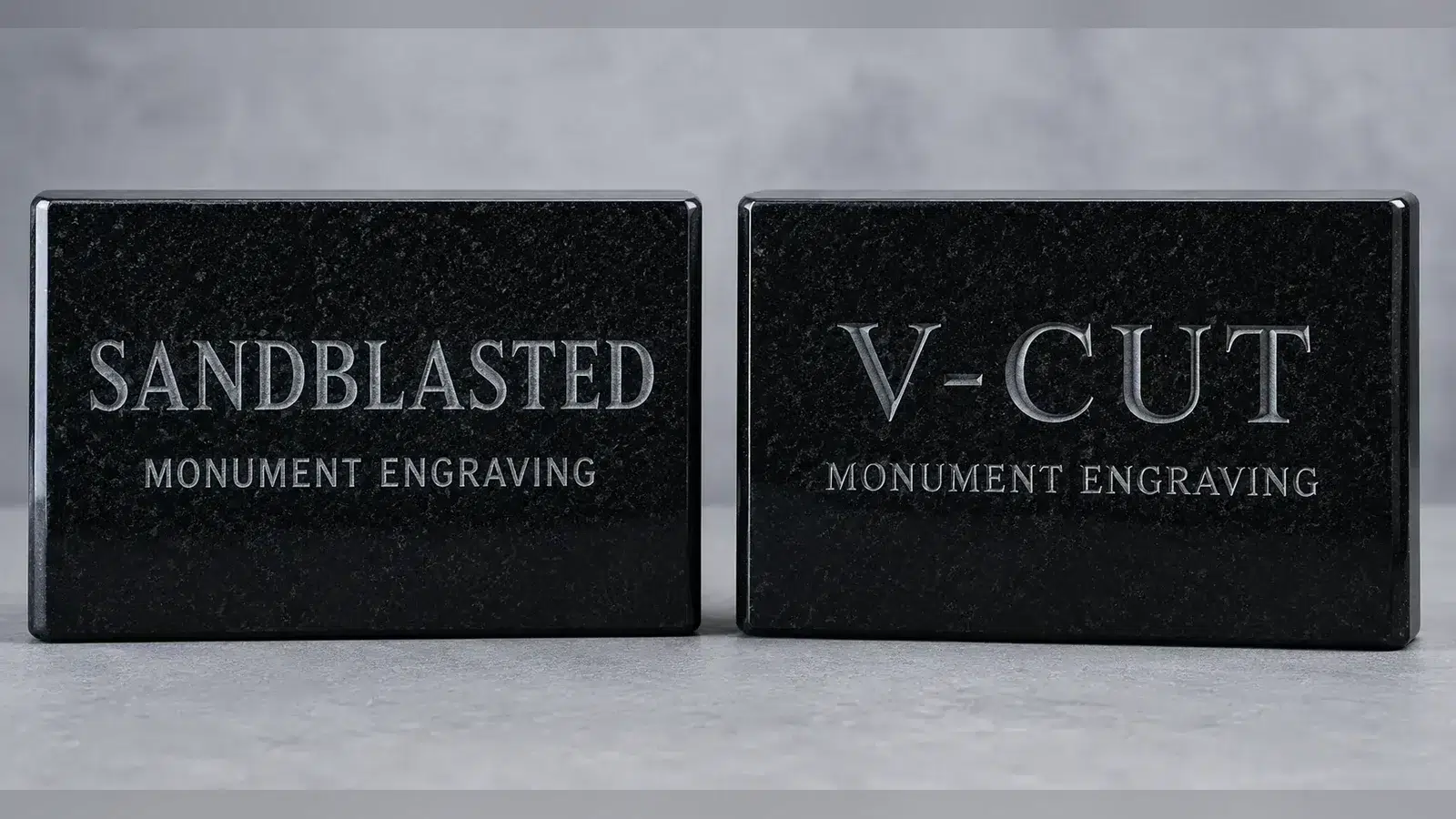
Sandblasting is the most common way to engrave a monument. It is also the method I use most. A machine pushes fine grit, usually aluminum oxide, through a nozzle at high pressure. A rubber stencil covers the stone. The grit only cuts where the stencil is open (memorials.com, 2025). It works on both light and dark granite. That is part of why it became the standard.


The deep cut is the payoff. The grit reaches well below the surface. So the letters hold their own shadow and stay easy to read for years. The last step is hand finishing. After the blast, I clean up the depth and the edge of each letter. That step turns a good inscription into a great one. Sandblasting is the default for names, dates, and most inscriptions. It works on almost every kind of monument, from upright headstones to flat markers and bronze markers on granite bases.
Method 2: Laser Etching, for Photorealistic Detail
Laser etching is the best choice for photos, portraits, and fine artwork. It works best on polished black granite. A laser burns off the polished top layer in a pattern of tiny dots. More dots make a darker tone. Fewer dots make a lighter tone. It works much like a printer (SuperNova, 2025). The result can look like a real photograph.


Why black granite? Contrast. The laser shows the lighter stone under the dark polish. So a portrait reads as a clean black and white image. That is why black granite headstones work so well for etched portraits. There is one catch. Laser etching sits on the surface, so it is shallower than sandblasting. In rough, freeze and thaw climates, it can fade a little over many decades (EI America, 2025).
Method 3: V-Cut (Hand Carved) Lettering, the Traditional Craft
V-cut lettering is the oldest method. It makes the deep, V-shaped grooves you see on classic monuments. A carver cuts each stroke by hand or with an air chisel. Both walls of the letter angle in and meet at a point below the surface. That groove catches light and shadow. It gives the letters a sharp, carved look that sandblasting cannot fully match.


This is slow, skilled work. So it costs more than a standard sandblasted inscription. But the depth is hard to beat. The letters can stay sharp for generations when the stone is suitable and the cut is done well. Families often save V-cut for a main name, a special quote, or a custom monument where the letters are meant to stand out.
Method 4: Shape Carving, Art in the Stone
Shape carving turns a flat design into a soft, rounded shape. Think a rose, a leaf, or a faith symbol with gentle curves. It is still a sandblasting method. The difference is how we blast it. We use layered rubber stencils and work in stages. Each stage takes away a little more stone in some spots and less in others. That builds gentle hills and valleys, so the design looks shaped, not flat. Most shape carving gets a frosted, matte finish that stands out against the polished stone. The depth stays shallow. The shape sits close to the surface. It is a nice middle step between flat lettering and full relief.


Shape carving costs more than flat lettering, but less than full relief. It adds a custom touch without a lot of hand work. Families pick it for a favourite flower, a faith symbol, or a small scene. It is also a common choice for custom monuments that need a personal detail without full sculptural carving. If you want that art with more depth and presence, the next method goes further.
Method 5: Relief Carving, True 3D Art
Relief carving is the most sculptural method. Here the art rises right off the surface in true 3D. There are two main types. In raised relief, we carve the background away. The figure is left standing above the stone, like a rose you could almost grab. In sunken relief, we carve the figure deep into the stone, well below the surface. Both catch strong light and shadow, so the art looks alive.


This is mostly hand work. A carver shapes each curve with chisels and fine tools. It takes the most skill and the most time of any method here. So it costs the most. Families save relief carving for a real centrepiece. Think a detailed rose, praying hands, or a portrait sculpted right into the stone. It is built to draw the eye and last for generations.
Types of Headstone Lettering Styles
The cutting method is only half the choice. How the letters sit in the stone matters too. So does the font. Four lettering styles cover most monument work:
- V-sunk (also called incised). This is the most common and most traditional style. Each letter is sandblasted into a V-shaped groove. The shadow makes it easy to read from far away, even without paint (memorials.com, 2025).
- Raised. The background is carved away. The letters stay polished and stand up above the surface. This is the boldest look, and the most costly.
- Frosted. The letters or a panel get a matte, lighter finish against the polished stone. This adds contrast so the text stays clear over time.
- Skin-traced. This is a shallow, frosted mark on the surface. It is often used on dark granite when a deep cut is not wanted.
Your font matters just as much. Four families cover almost every monument:
- Serif (such as Modified Roman). Small strokes sit at the end of each letter. It is the most traditional, and the most common on upright monuments.
- Sans-serif. Clean and modern, with no end strokes. It suits flat markers and simple designs.
- Script. Flowing and personal, like handwriting. It looks lovely for a name. Use it in small doses so it stays easy to read.
- Block (or Gothic). Bold and strong, for families who want a big presence.
V-sunk letters in a Modified Roman serif is the combo I cut most. There is a good reason it lasts. The deep groove reads clearly for a lifetime, and it does not rely on paint. For a personal touch, a custom monument can mix styles. You could set a script name above block dates. If you are still choosing the words, our headstone wording guide can help before the layout is drawn.
What Affects the Cost of Monument Engraving?
The method is only one part of the price. Cost also changes with letter height, number of characters, artwork size, granite colour, stencil time, hand finishing, and whether the work is done in the shop or on site at the cemetery. A simple sandblasted name and dates costs less than a portrait, a large carved rose, or raised relief lettering because it takes fewer setup steps and less hand work.
Cemetery rules can affect the final plan too. Some GTA cemeteries limit monument size, marker type, artwork, lettering height, or added inscriptions. Before anything is cut, Haven prepares a design proof and confirms what the cemetery allows. For a broader look at local rules, see our GTA cemetery guide.
How Do the Methods Compare?
Each method has its own job. Sandblasting handles most lettering. Laser etching handles photos. V-cut gives the deepest classic text. Shape carving adds soft, frosted depth. Relief carving adds true 3D art. The table below shows where each one fits.
| Method | Detail Level | How Long It Lasts | Best For | Cost |
|---|---|---|---|---|
| Sandblasting | High, crisp lettering | Can stay clear for generations; painted finish may need refreshing | Names, dates, most inscriptions | $, moderate |
| Laser Etching | Very high, close to a photo | Decades; sits on the surface | Portraits, photos (black granite) | $$, varies by detail |
| V-Cut Lettering | High, deep and bold | Can last for generations; the deepest cut | Main names, quotes, feature text | $$$, lots of labour |
| Shape Carving | High; soft, frosted depth | Long; shallow and frosted | Roses, symbols with soft depth | $$, added artwork |
| Relief Carving | Very high; true 3D | Built for generations; deep sculpted stone | Centrepiece roses, figures, portraits | $$$$, most hand work |
Can You Combine Methods on One Monument?
Most full monuments use more than one method. Two or three is common.
A single granite monument often mixes them. Sandblasted names and dates do the heavy work. A laser etched portrait can be the centrepiece. A shape carved or relief carved rose adds character. The trick is the order. Etching and carving happen in the shop, before the stone is set. A final date is added at the cemetery later. So plan the layout early. Leave room for that future date. Balance the portrait against the lettering. That is what keeps a stone from looking crowded. If you are comparing overall memorial types first, start with our monuments and grave markers page.
How Do You Choose the Right Method?
Start with what goes on the stone, not the budget. For clean names and dates, sandblasting is almost always right. A photo of your loved one calls for laser etching on black granite. A deep, classic quote as the main feature is a job for V-cut. A soft, frosted rose or symbol points to shape carving, and when you want that art in full, true 3D as a centrepiece, relief carving is the one. Most monuments use two or three of these.
Do you already have a monument in place? Just need a final date or a new name added? That is a different job, done on site at the cemetery. See the FAQ below for how it works. Looking at a brand new memorial instead? Browse our monuments Toronto collection to start.
For new work, ask to see a proof before production. The proof should show the name, dates, artwork, font, letter height, and open space for any future final date. This is where families catch crowding problems before the stone is engraved.
Frequently Asked Questions
What is the difference between engraving and etching?
Engraving cuts down into the stone. Etching removes a thin top layer to make an image. Sandblasting and V-cut are true engraving. Laser etching is, as the name says, etching. In short, engraved letters are deep and shadowed. Etched images are fine, shallow, and look like a photo.
Which monument engraving method lasts the longest?
V-cut hand carving usually lasts the longest because it cuts the deepest. Sandblasted lettering is also very durable because the cut goes into the stone itself. Painted contrast may need refreshing after years of sun and weather. Laser etching can last for decades, but it sits closer to the surface, so it may fade sooner in rough weather.
What is the most popular headstone lettering style?
V-sunk lettering, also called incised, is the most popular and most traditional. Each letter is cut into a V-shaped groove. The angle makes a natural shadow, so you can read it from far away without paint. It pairs most often with a Modified Roman serif font.
Can you put a photo on a headstone?
Yes. Laser etching copies a photo into the granite surface. It reads best on polished black stone. The laser builds the image from thousands of tiny dots. It needs no special care beyond keeping the stone clean.
Can you add engraving to a monument that is already set?
Yes. A final date, a new name, or a new line can be added at the cemetery. A skilled engraver does this on site. It is a different service from new factory engraving. You can learn more on our on site monument engraving in Toronto page.
About the Author
Cass Lee has worked in the funeral trade for more than 15 years. That includes ten years making and sandblasting granite monuments, plus a background in wood carpentry. Cass writes Haven Casket & Monument’s guides. The goal is simple. Help families in the Greater Toronto Area learn their options, see real costs, and choose with confidence at a hard time.
My Advice After Ten Years
Match the method to what goes on the stone: sandblasting for names and dates, laser etching for photos, V-cut for deep feature text, shape carving for soft, frosted depth, and relief carving for true 3D art. Your lettering style and font set the mood. After ten years of cutting these by hand, my advice is short. Match the method to the job. Pick a style you will still love in 50 years. Then let the craft do the rest.